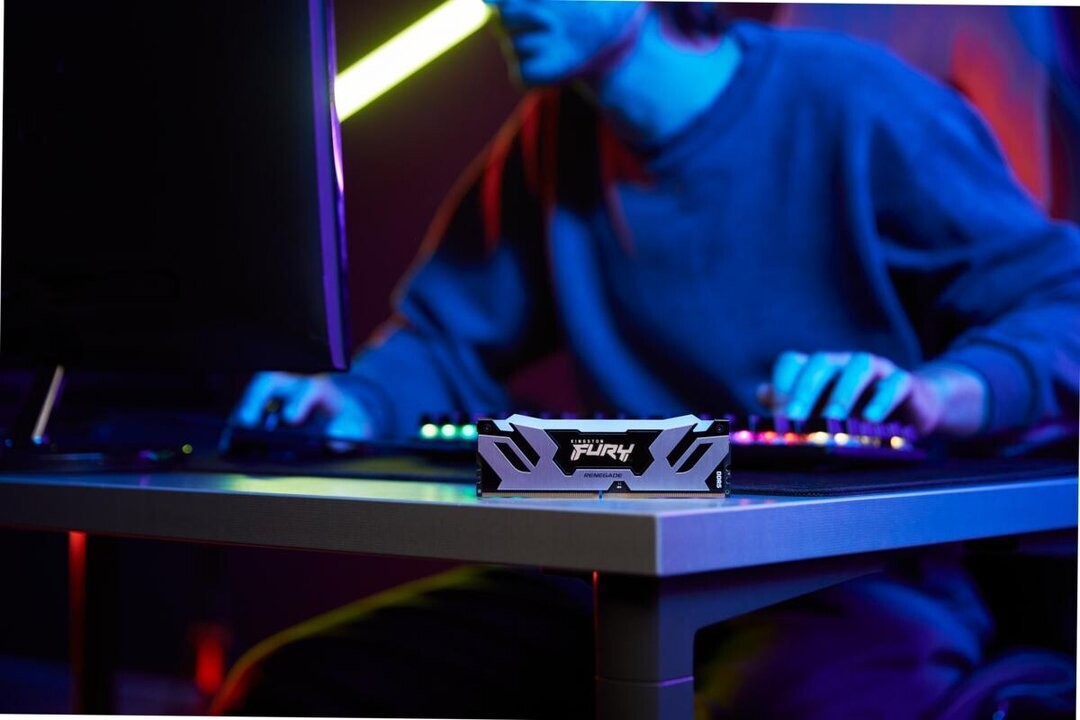
Gaming demand will continue to drive the adoption of DDR5, NVMe SSDs, and platforms ready for AI, while the challenge will be to ensure volume and supply continuity. In a market where gaming has ceased to be a niche and has become a central driver of the tech business, the Spanish-speaking region is emerging as one of the most active hubs for innovation and consumption in Latin America.
The adoption of DDR5 memory marked a turning point in 2025 for the gaming ecosystem of the Spanish-speaking region, which not only accelerated its technological upgrade but also outpaced the rhythm of traditionally larger markets. The hardware refresh, as learned by the Argentine News Agency (NA), driven by increasingly demanding titles and the need to prepare systems for artificial intelligence, consolidated a new consumption map where performance and speed became priorities.
In this context, gaming was one of the main engines of the year. The forced migration to Windows 11, the growth of the PC gamer as a primary platform, and the need for fast storage for large games boosted the demand for next-generation memory and high-performance SSDs. The region responded quickly: more setups oriented towards eSports, streaming, and content creation adopted DDR5 as a standard, definitively leaving behind previous generations.
It is in this scenario that Kingston Technology presented its 2025 market balance and confirmed that the Spanish-speaking region led the adoption of DDR5, even surpassing Brazil and Mexico. According to the company's analysis, the gamer segment was key to this growth, with strong traction from high-performance memory and solutions designed for demanding users, in a year marked by technological renewal and volatility in chip prices.
The impact was clearly reflected in countries like Chile, Peru, and Argentina, where the reactivation of the gaming business strongly boosted high-performance-oriented product lines. In Chile, for example, 59% of total RAM sales already correspond to DDR5, and more than half of the units sold are associated with advanced configurations. In Peru and Uruguay, the growth of gaming explained a large part of the market's dynamism, even in disparate economic contexts.
Another determining factor was the global semiconductor shortage recorded since September, which strained supply and accelerated purchasing decisions among the most intensive gamers. Facing sustained price increases, many gamers opted to advance upgrades or seek solutions with a better cost-performance ratio, solidifying memory and storage as strategic components to sustain the gaming experience at competitive levels.
IP
Looking ahead to 2026, the outlook anticipates an equally demanding scenario.